
Gearless Elevators Explained: Why Gearless, Oil-Free Lifts Suit Hotels, High-Rises and Modern Homes
A gearless traction lift drives its sheave without a reduction gearbox. Gearless describes the drive; machine-room-less (MRL) describes the installation arrangement. Eliminating gearbox oil does not make the complete lift lubrication-free or maintenance-free.
Step into a lift in a premium hotel and you may notice what is missing: no jolt when it starts, no hum from the machinery, and no tell-tale lurch at the floor. In most cases, that quiet confidence comes from gearless technology. If you are choosing a lift for a new building, or planning to replace an old one, understanding what “gearless” means will help you ask the right questions and compare quotes sensibly. This guide explains how gearless elevators work, what benefits they offer, and where they make the most sense.
What Is a Gearless Elevator?
Every traction lift has a machine that turns a sheave, which moves the ropes that carry the cabin and the counterweight. In a geared lift, a gearbox sits between the motor and the sheave to reduce the motor’s speed and increase its pulling power. In a gearless lift, the motor drives the sheave directly. There is no gearbox, which means fewer moving parts, less friction and less heat. Modern gearless machines are compact, which is why they pair well with space-saving, machine-room-less (MRL) designs.
Gearless vs Geared at a Glance
- Ride quality: Gearless machines accelerate and slow down more smoothly, so the ride feels softer. Geared machines can feel less refined, especially as they age.
- Noise: With no gearbox, there is less mechanical noise, which matters in hotels, hospitals and homes.
- Energy use: Direct drive wastes less energy as friction and heat, so gearless lifts are generally more energy-efficient than older geared systems.
- Lubrication: Removing the gearbox removes gearbox-oil servicing. Other components may still require lubrication according to the manufacturer’s maintenance instructions.
- Maintenance: Gearless equipment still needs scheduled inspection and servicing. Reliability depends on the complete installation and its operating conditions.
- Speed and height: Gearless machines handle higher speeds and taller buildings with ease.
The Technology That Makes the Ride Smooth
Ride quality depends on the motor, variable-frequency drive, feedback controls, installation and maintenance together. Specify acceleration, noise and levelling expectations, and assess a working installation. A coin demonstration is not a substitute for measured performance or safety testing.
Where Gearless Lifts Make the Most Sense
- Hotels: Guests notice noise and jerks. A smooth, quiet lift becomes part of the experience.
- High-rise residential buildings: Taller buildings need speed and capacity, plus dependable daily performance for hundreds of residents.
- Offices and commercial towers: Faster, more efficient lifts keep people moving at peak hours.
- Hospitals: Quiet, accurate levelling is gentler on patients and smoother for stretcher movement.
- Premium villas and homes: A near-silent lift suits bedrooms and living areas on multiple floors.
Planning Gearless Lifts for Hospitality
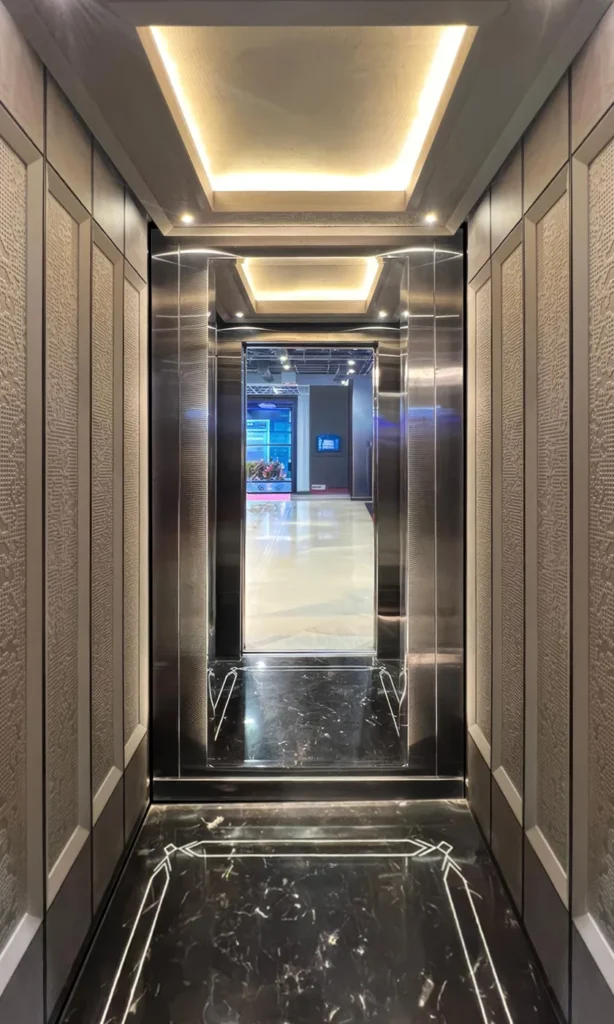
Hospitality projects combine quiet operation, suitable traffic capacity and a cabin finish that complements the interior. Ask for comparable completed installations and permission to visit one. Confirm the proposed model and its performance in the quotation.
Speed and Capacity for Large Buildings
Select speed, rated load and the number of lifts through a building-specific traffic assessment. Ask HYBON for the current technical data sheet for the proposed model; the maximum capacity of a product range does not establish suitability for your project.
Remote Monitoring and Preventive Maintenance
Remote monitoring may help identify faults, depending on the supplied system and service agreement. Confirm connectivity, alerts, response responsibilities and recurring charges. It complements scheduled inspections and on-site maintenance; it does not replace them.
Questions to Ask Before You Choose a Gearless Lift
- Is the machine gearless, and which components still need lubrication?
- Which drive and control system does it use, and how does it handle levelling?
- Can I ride a working lift or see a demonstration before I order?
Ask which current standards and local approvals apply to this equipment and obtain the relevant model-specific documentation. Confirm the scope and validity of any certificate.
5 What speed and passenger capacity do you recommend for my building?
6 What does the AMC cover, and what is the response time for a breakdown?
7 Can the cabin be customised to match my interiors?
Frequently Asked Questions
What is a gearless elevator?
A gearless elevator uses a motor that drives the sheave directly, without a gearbox in between. This removes the gearbox and its oil-servicing requirements; overall ride quality depends on the complete system.
Are gearless elevators more energy-efficient?
Generally yes, compared with older geared systems. Direct drive reduces friction and heat losses, so less energy is wasted.
Do gearless lifts need less maintenance?
They have fewer wearing parts and no gear oil to manage, so servicing is usually simpler. Regular maintenance is still essential for safety.
Are gearless lifts only for tall buildings?
No. They are popular in high-rises and hotels, but their smooth, quiet performance also suits homes, hospitals and offices.
What does a gearless lift cost?
Cost depends on the number of floors, capacity, speed, cabin finish and site conditions. A free consultation and written quote give the most accurate figure.
Is a gearless lift the same as a machine-room-less (MRL) lift?
Not exactly. Gearless describes the motor. MRL describes where the machine is placed. Many MRL lifts use compact gearless machines, which is why the two are often mentioned together.
Continue planning your project
Standards and project checks
Confirm the current standard edition and local approval requirements for the proposed equipment with your designer and lift provider. Request model-specific certificates, test records and handover documents.
Reference: BIS — find the applicable Indian Standard.
